New Delhi, November 3, 2026: Passengers booking flights in India will soon have greater clarity…
Hyderabad Egg Donation Racket Exposed, 43 Women Rescued as Police Probe IVF Centre Links
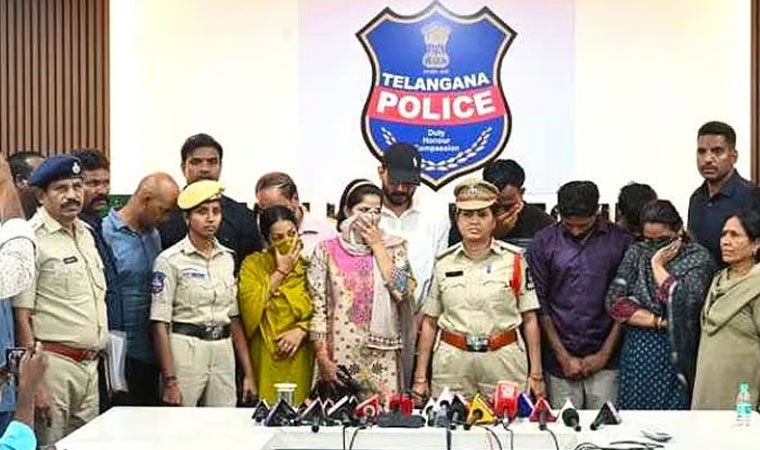 An interstate network allegedly recruited financially vulnerable women for egg donation procedures, raising concerns over illegal medical practices, exploitation and compliance with fertility laws.
Hyderabad, November 3, 2026: Promises of financial assistance allegedly drew dozens of women from different parts of India to Hyderabad, where investigators have uncovered a suspected illegal egg donation network operating through recruitment agents, rented accommodation and connections with fertility service providers.
The investigation has raised serious concerns over the possible exploitation of economically disadvantaged women and the alleged violation of medical safety regulations governing assisted reproductive technology.
According to police, coordinated operations conducted by the Begumpet and Saroornagar police, along with the Special Operations Team of the Malkajgiri Commissionerate, led to the rescue of 43 women and the apprehension of eight suspects. A ninth person was arrested in a related Saroornagar case.
Women Recruited from Several States with Cash Offers
Preliminary investigations indicate that agents approached women facing financial difficulties and offered payments ranging from ₹20,000 to ₹30,000 for participating in egg donation procedures.
Women from states including West Bengal, Uttar Pradesh, Maharashtra, Assam, Chhattisgarh, Jharkhand and other parts of the country were allegedly recruited through intermediaries.
Investigators believe the network arranged transportation to Hyderabad, provided accommodation in rented properties and facilitated contact with fertility-related establishments.
Some of the women reportedly stayed in hostels and other temporary accommodation while awaiting medical procedures.
Police are examining whether the women fully understood the medical risks involved and whether proper consent procedures were followed.
Raids Uncover Hormonal Medicines and Medical Equipment
During searches across Prakash Nagar, Begumpet, Erragadda, Saroornagar and Gopalapuram, investigating teams recovered medicines, injections, medical equipment, identity-related documents and mobile phones.
Among the seized materials were hormonal stimulation drugs, syringes, needles and tablets associated with reproductive treatment.
Several women reportedly told investigators that they had received hormonal injections and medication in preparation for egg donation.
Authorities are examining allegations that medical activities were conducted without appropriate professional supervision and that prescribed biomedical waste disposal procedures were not followed.
The seized materials and medical records are being examined to establish the nature and extent of the alleged operations.
Police Identify Suspected Organisers and Recruitment Network
Malkajgiri Police Commissioner B. Sumathi has been overseeing the investigation into the suspected interstate operation.
Police have identified Amit Sharma, originally from Madhya Pradesh, as a suspected principal organiser.
Another accused, Nikkat Parveen, is alleged to have played a role in recruiting women, particularly from West Bengal, and coordinating their travel and accommodation.
Other individuals apprehended in connection with the investigation include Reshma Khatoon, Meghavath Srinivas, Jepray Pradeep, Shaik Parveen, Vijay Bhagwah Rao Salunke and Pankaj Soni.
A businessman identified as Emirishetty Durga Prasad was separately arrested in connection with a related Saroornagar case.
Investigators are examining the responsibilities of those involved, including suspected recruitment, documentation, medical coordination and financial arrangements.
Fertility Centres Come Under Investigation
The police investigation has also turned towards possible connections between the suspected network and IVF clinics and Assisted Reproductive Technology (ART) banks in Hyderabad.
Authorities have identified 23 IVF centres for further scrutiny as they examine whether any medical establishments knowingly facilitated unauthorised egg donation arrangements.
Investigators are reviewing financial transactions, medical records, donor information and the procedures followed by relevant service providers.
The identification of fertility centres for investigation does not, by itself, establish wrongdoing by those institutions.
Police are also examining allegations involving falsified identity documents and the possibility that some women may have been recruited for repeated egg donation procedures.
Investigation Raises Questions Over Fertility Regulations
Under India’s Assisted Reproductive Technology (Regulation) Act, 2021, egg donation is subject to specific legal safeguards.
Section 27 of the legislation provides that an eligible woman may donate eggs only once in her lifetime, with no more than seven oocytes retrieved during that donation.
The legislation also regulates the responsibilities of registered ART banks and clinics, including donor screening, documentation and medical procedures.
Investigators are examining whether the suspected network attempted to circumvent these requirements through irregular documentation or other unauthorised arrangements.
Three criminal cases have been registered at Begumpet and Saroornagar police stations under relevant provisions of the Bharatiya Nyaya Sanhita and the ART Act.
The allegations under investigation include suspected trafficking, cheating, organised criminal activity and violations of medical regulations.
Authorities Continue Investigation into Alleged Exploitation
Police are working to establish how the women were recruited, whether they underwent egg retrieval procedures and whether any individuals or institutions profited from illegal arrangements.
Investigators are also verifying medical histories and examining whether the women were subjected to coercion, deception or unsafe treatment.
The case has brought renewed attention to the risks faced by financially vulnerable women recruited for reproductive medical procedures through unregulated intermediaries.
Further findings are expected as authorities examine the suspected network’s financial dealings, medical activities and possible connections with fertility establishments.
The allegations against the accused remain subject to investigation and judicial proceedings.
Related Posts